FOREHAND TRIMMING
There is a big difference between trimming on your forehand vs trimming on your backhand – with most people finding things a little easier riding forehand.
So let’s start with the trimming on your forehand to get things started.
WHY IS TRIMMING FOREHAND EASIER?
Trimming on your forehand is made easier for a couple of reasons:
- With your chest facing the wave it’s easier to look where you’re going.
- The ability to use your toes and the balls of your feet for balance allows for greater stability and more forgiveness.
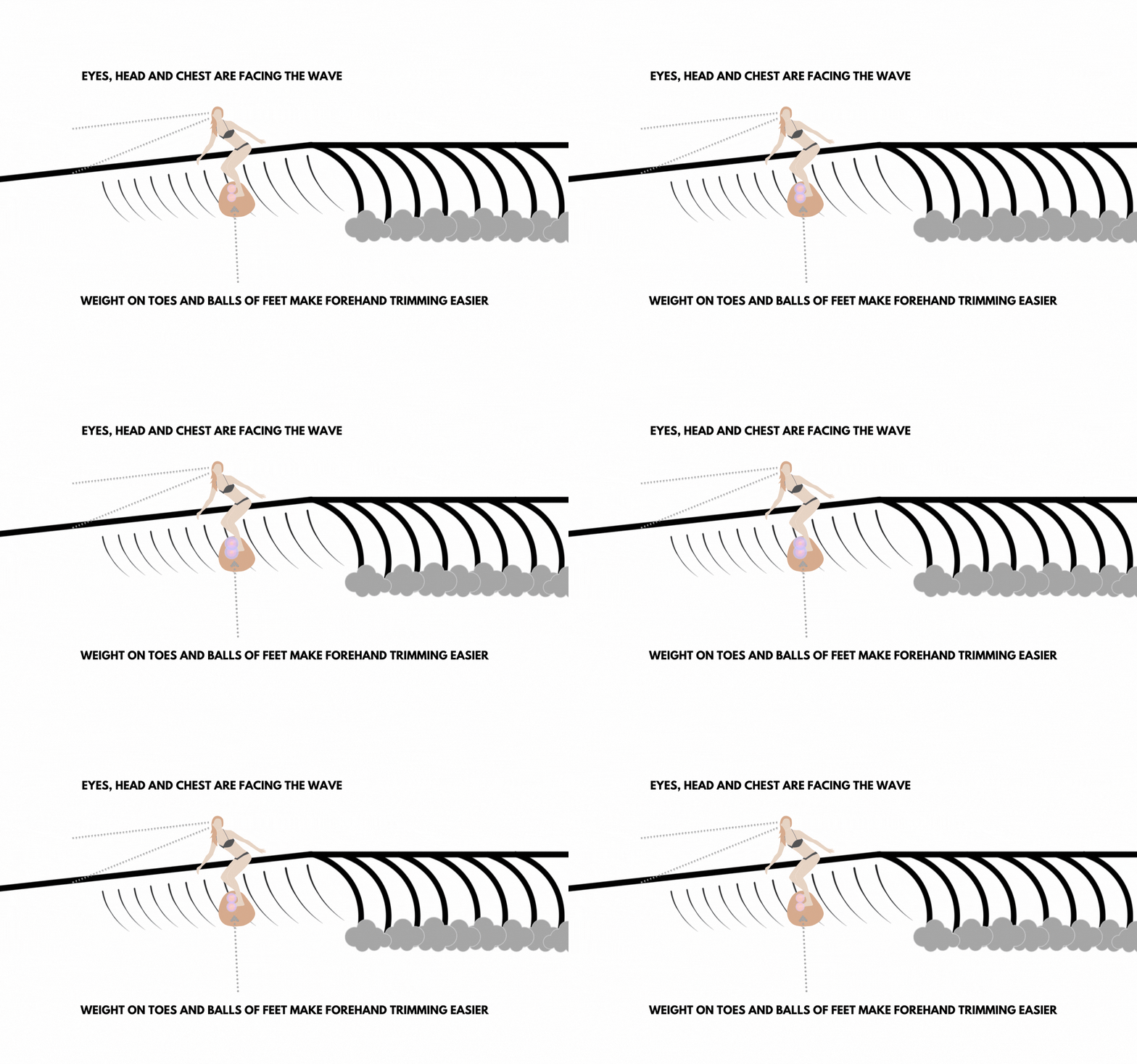
HOW TO TRIM ON YOUR FOREHAND
A lot of the work when it comes to trimming across a wave is all done in the set-up.
It comes from:
- Good wave selection.
- Strong paddling to catch the wave early.
- A quick pop-up.
Execute these three things well, and setting your line to trim across the wave will be a breeze. However get any of the above wrong, it’ll be almost impossible to achieve.
Lets break the whole process down in detail below:
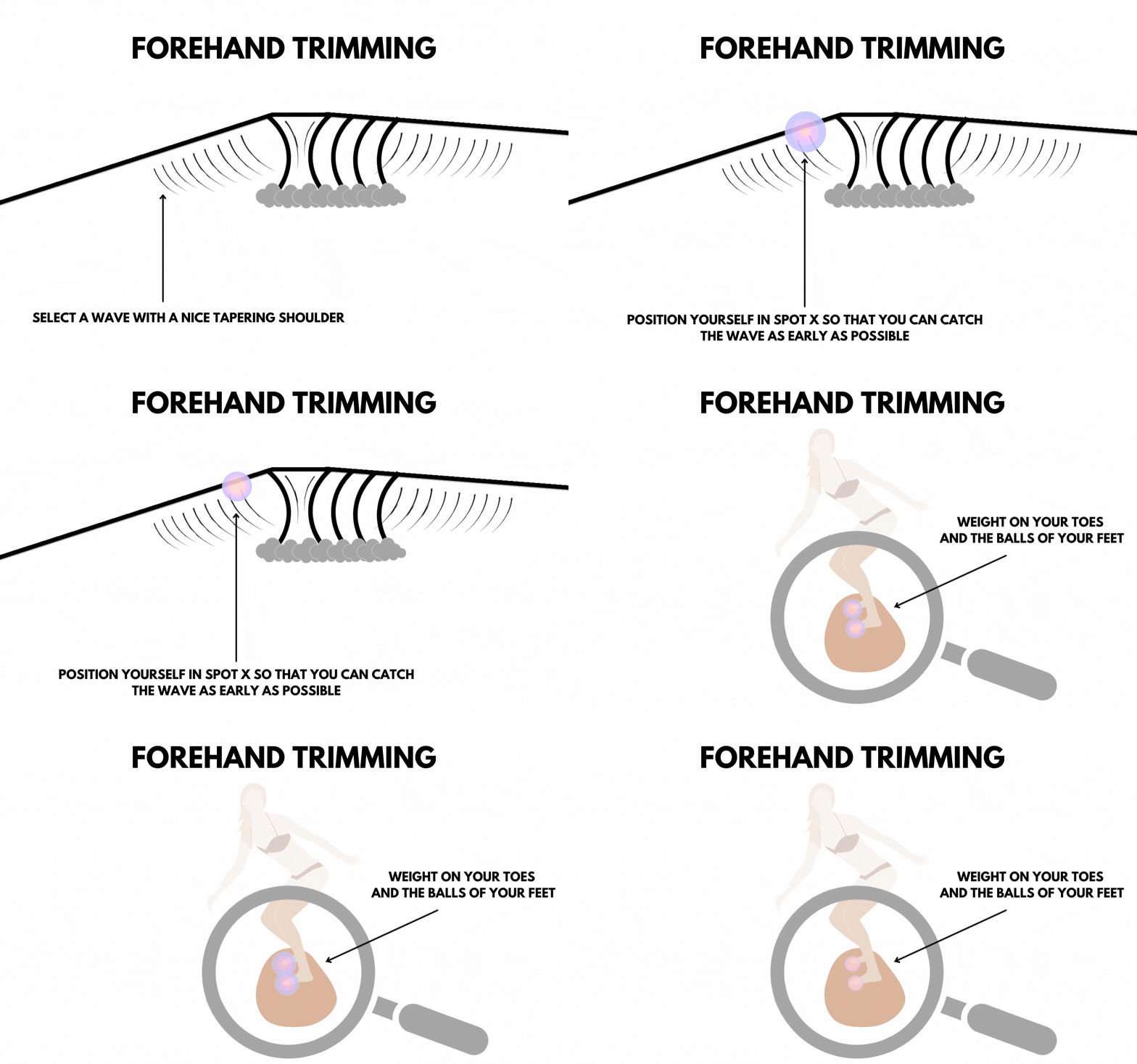
- Spot a wave with a nice tapered shape that’s going to break down the line slowly.
- Position yourself effectively so that you’re able to catch the wave early, and paddle hard to catch the wave.
- Once you have confirmation that you are on the wave, pop quickly to your feet. Important: You should be on your feet whilst still at the top of the wave.
- As soon as you are on your feet, immediately start putting weight onto the balls of your feet and your toes. This will in-turn begin to turn the surfboard.
- Keep your eyes looking to where you want your surfboard to go.
- Once your line is set, maintain balance and you’re away!
QUICK TIP: SET YOUR LINE EARLY!
Alright, so trimming across a wave is made so much easier when you’re able to set your line early, which involves popping up quickly, and getting your line set straight away.
This is important for a few reasons:
– Getting to your feet early is the safest way to ride down a green wave (if you’re riding down a wave on your belly there’s a high chance you’ll nosedive).
– Setting your line early cuts off the steepness of the wave in the same way that a road goes around a mountain – rather than straight up – which helps to avoid nosediving.
– Setting your line early within the curve of the wave is much easier to do than trying to set your line in the flats.
WRAPPING IT UP
Just like painting a wall is 90% preparation: removing grease, filling holes, sanding, masking taping, laying dust-sheets, cutting in, etc.
And only the final 10% is where the glory happens, and you finally get to actually paint the wall itself.
The same holds true with trimming on a wave.
90% of the work is in the set-up.
Get all of that right, and you’ll be crushing it.